Green Martian humor
A Princess of MarsGreen Martian humor is a social code that makes another being’s suffering a source of amusement, most commonly through the killing of prisoners. Its importance lies not only in the cruelty it reveals, but in the way laughter repeatedly misleads John Carter: a gesture that might signal friendliness in his world may express approval of violence among the Green Martians. Against that convention, his first shared laughter with Woola becomes a rare sign of affection—and a reminder that the same sound can carry opposite meanings.
The Meaning of Laughter
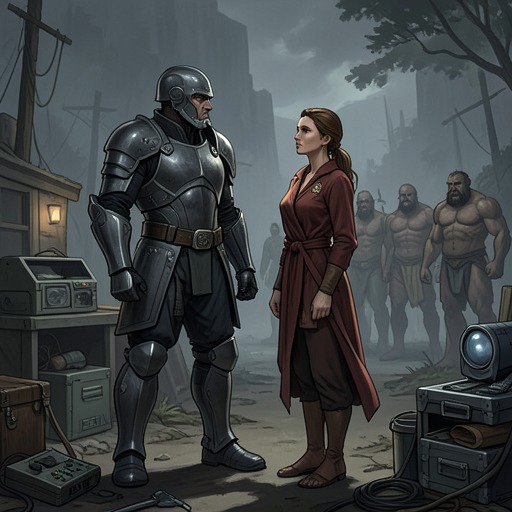
When John Carter first observes Tars Tarkas and the Green Martian chieftain smiling in response to him, he takes their shared expression as evidence that they have something in common: the capacity to smile, and therefore to laugh. His conclusion is understandable but incomplete. He later learns that a Martian smile is perfunctory, while Martian laughter has a much more disturbing social meaning. The apparent point of connection between captor and captive thus becomes a warning about how little their emotional conventions overlap.
The difference is not merely that the Green Martians laugh at different kinds of jokes. Their commonest amusement is inflicting death on prisoners of war through various methods, and the death agonies of another being can produce their wildest hilarity. Laughter, in this society, does not soften violence or mark distance from it; it can be the sound violence is meant to produce. What Carter initially reads as a familiar human capacity therefore proves to be embedded in a radically unfamiliar moral order.
Public Approval and the Captive
The council’s treatment of Carter makes that code visible in a smaller episode. Asked to demonstrate his unusual movements, he tries to walk, loses his balance, and ends up moving among desks and chairs in awkward leaps. The warriors laugh at his mishaps. When one of them roughly hauls him upright, Carter strikes him and prepares for the others to retaliate. Instead, the assembled Martians answer with laughter and applause. Only later does Carter understand that their response was an uncommon manifestation of approval.
The scene establishes that their amusement can be directed at a captive’s helplessness without becoming a simple verdict against him. Carter’s failed movements entertain them; his sudden blow and readiness to fight impress them. Their response follows their own expectations rather than his: the audience is capable of appreciating a forceful reversal even while it enjoys a stranger’s misfortune. Humor and esteem coexist, but neither implies the humane sympathy Carter might expect from applause.
Dejah Thoris and the Council
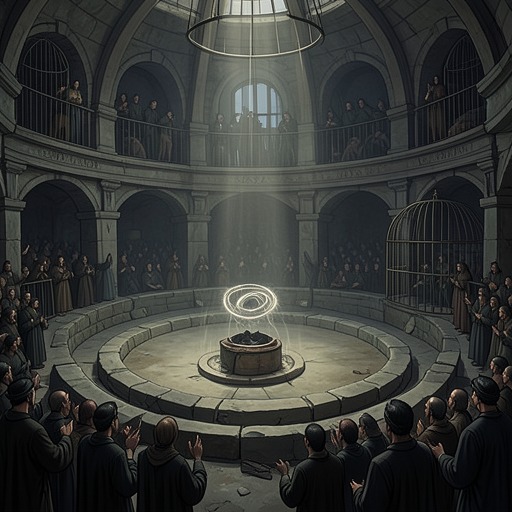
The gulf between Carter’s moral expectations and Green Martian custom becomes politically consequential during Dejah Thoris’s appeal to the council. She explains that her expedition was peaceful and argues that Red Martian scientific work sustains the planet’s air and water supply. She urges the Green Martians to abandon their harsh communal order and join the Red Martians in efforts to regenerate a declining world. Her speech briefly appears to move the assembled warriors. Tars Tarkas rises with an expression Carter has never seen on a Green Martian warrior, as though he is struggling against inherited custom; the words he might have spoken never come.
A young warrior interrupts the possibility of response by striking Dejah Thoris down. He then turns to the council and laughs. Carter sees that the act has, by the prevailing ethics of Green Martian humor, amounted to a successful joke. The older warriors appear momentarily poised to punish the young man, but their customary outlook reasserts itself: they smile rather than reject the act. The episode shows how humor can help restore a violent social norm precisely when compassion threatens to alter it. Dejah Thoris’s appeal is not simply unanswered; its interruption is converted into entertainment, and the council’s reaction lets inherited convention prevail over the change Tars Tarkas seemed close to voicing.
Woola and a Different Kind of Laughter
Carter’s bond with Woola gives laughter another meaning. At the edge of the area where he is permitted to go, Woola presses against his legs, pleading rather than threatening. Carter has grown attached to Woola and Sola in the absence of companionship from his own kind, and he chooses to appeal to the animal’s capacity for affection. He sits, puts his arms around Woola’s neck, strokes him, and speaks in Martian as he would to a familiar animal at home.
Woola responds with exuberant play: he rolls onto his back, springs against Carter, tumbles him to the ground, and wriggles beside him as though asking to be petted. Carter laughs for the first time in many days. The laughter arises not from another’s pain but from an affectionate encounter that momentarily restores a familiar form of companionship. Yet the Green Martian meaning of laughter immediately shadows the moment. Woola is frightened, and Carter remembers that on Mars laughter signifies torture, suffering, and death. He quiets himself, comforts Woola, and commands him to follow.
From then on, Woola is Carter’s devoted companion, while Carter becomes his undisputed master. Their exchange demonstrates that the sound alone cannot determine the meaning: context and relationship distinguish cruelty from play, just as Carter’s first apparent common ground with the Green Martians proved unreliable. Through that contrast, Green Martian humor becomes more than a detail of alien custom. It measures the moral distance between Carter and his captors, while Woola’s response suggests that affection can still create a relationship outside the logic of violence that governs their society.